
Imperial Castle, Poznań
Poznan, Poland
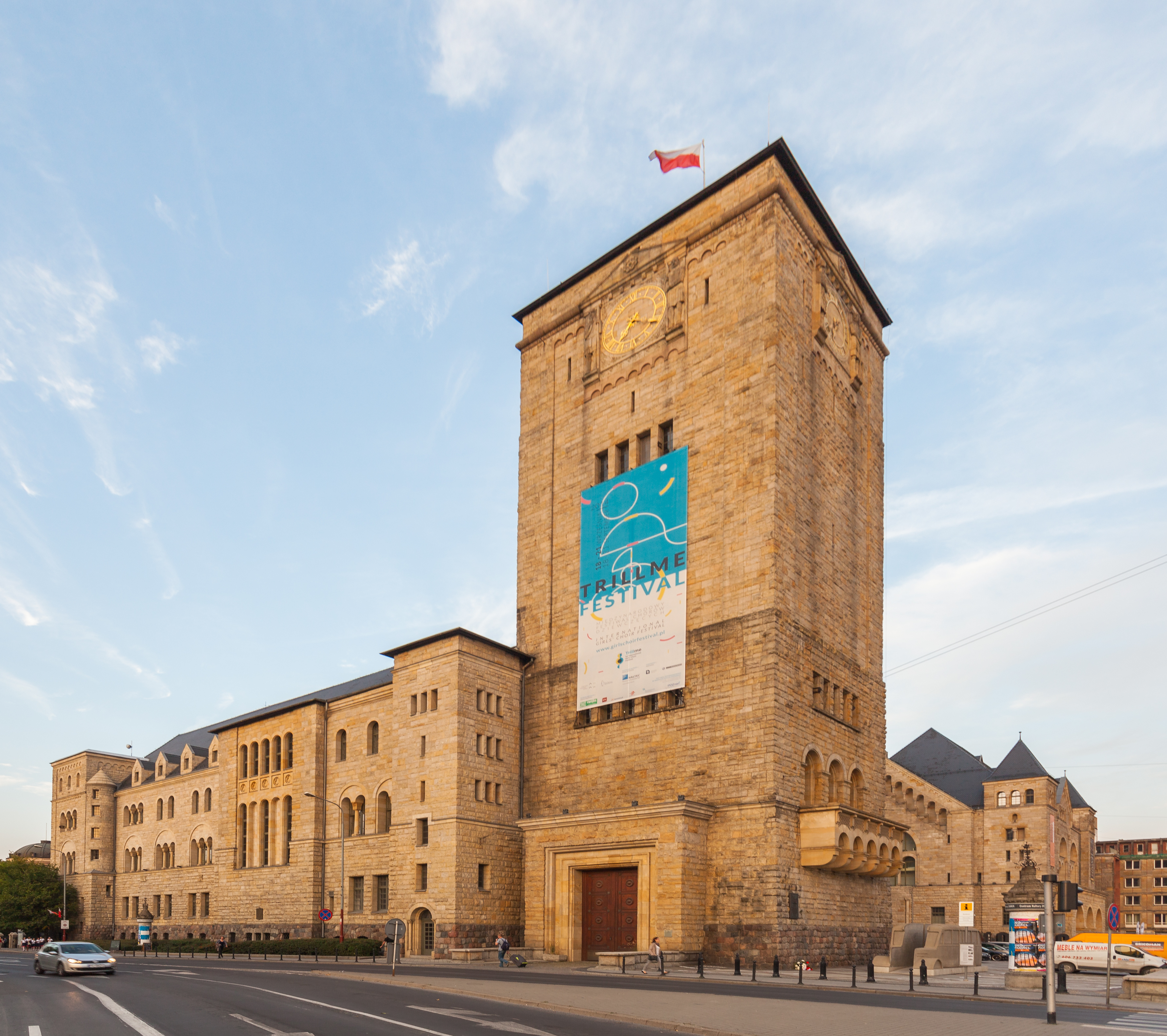
The Imperial Castle in Poznań was built for Wilhelm II, who personally specified details of his new residence. Architect Franz Schwechten designed its irregular polygonal form in Neo-Romanesque style. Initial site work began in 1904, followed by construction in 1905. The design used the style Wilhelm considered Germanic and associated with the Holy Roman Empire. The southern main building had residential rooms in its larger western wing and state rooms in its eastern wing.
Most rooms connected to a foyer around the courtyard. The emperor and empress had first-floor rooms and a private chapel in a tower, while the heir occupied the second floor. August Oetken designed the chapel in Byzantine style. On 21 August 1910, Schwechten handed the keys to Wilhelm during his visit to Poznań.
The castle’s Throne Room had arcades, eight statues of German emperors, an oriental throne, and galleries for visitors and an orchestra. Wilhelm returned on 27 August 1913 for the chapel’s opening. Bogdan Hutten-Czapski served as the sole burgrave from 1906 to 1918. During the Greater Poland uprising, kitchens with large ovens in the cellars prepared meals for insurgents.
After the uprising, the castle became state property. A 1921 government resolution assigned it first to the Chief of State and then to the president. It also housed parts of Poznań University, student and scouting organizations, government offices, and periodical editorial offices.
In 1939, German authorities began remodeling the castle as Adolf Hitler’s intended residence and as Artur Greiser’s seat. The former chapel became a private office, with an electrically heated balcony planned for reviewing parades. There is no evidence Hitler visited Poznań; he saw the castle only in a photograph. In 1943, he ordered the remodeling halted as Germany suffered reverses on the Eastern Front.
After the Citadel capitulated on 23 February 1945, the castle became a transit camp for German prisoners of war. Most Nazi symbols were removed, and the damaged top of the clock tower was dismantled. In 1948, the castle became the New Town Hall and seat of the Municipal National Council. Bolesław Szmidt proposed a major redesign in 1950, but only the Blue and Marble Rooms from his plan were completed. The building became the Palace of Culture in 1962.
The castle was listed as a historic monument on 6 March 1979. Today, the Zamek Culture Centre administers it, with the former Throne Room serving as the Great Hall. Some former apartments are exhibition and concert rooms, and the building houses the Animation Theatre and Children’s Art Centre. Reconstruction of the Great Hall complex began in 2010 and was completed at the end of 2012.
Since 2002, the castle has been the main venue for presenting art at the International Sculpture Triennial. The Poznań Uprising Museum opened on its ground floor that June. The castle was the principal building of the Imperial District, a planned complex of civic, educational, religious, and cultural buildings. In 2010, ceremonial celebrations marked the centenary of its completion.
Listen to this audio guide in the app
The website shows the text and photos. The audio guide, map and nearby places are in the free Hotspot app.
Download free on Google Play