
Winter Palace of Prince Eugene
Vienna, Austria
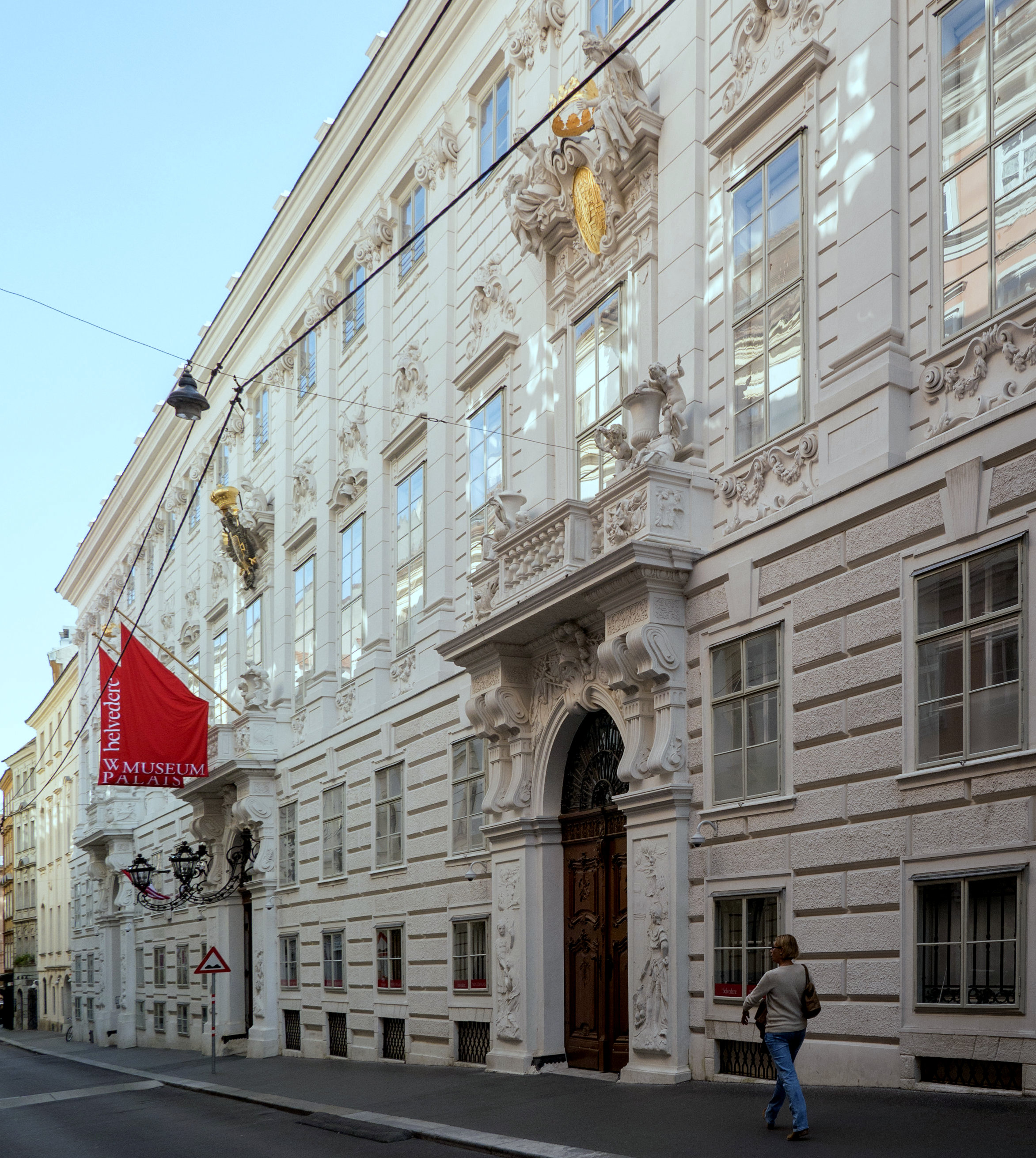
The Winter Palace of Prince Eugene is a High Baroque palace in Vienna, built as the prince’s winter residence and principal home. Prince Eugene began acquiring plots for it in 1693 and 1694, incorporating older houses and an early Baroque theatre hall. Construction started in 1697 under Johann Bernhard Fischer von Erlach, with seven window axes. Johann Lucas von Hildebrandt took over in 1702 and enlarged the palace to twelve axes from 1708 to 1711. The final phase, from 1723 to 1724, brought it to seventeen axes, adding a library wing and a third portal.
Prince Eugene used the palace for receptions and audiences as well as his home, while summers were spent at Belvedere Palace. His collections, including his extensive library, were housed here. The grand staircase has atlas figures and a resting Hercules, with its visual sequence leading from Eugene’s profile portrait to Louis Dorigny’s Apollo in the sun chariot.
The Red Salon served as the audience chamber, while the Blue Salon was the central reception room. Marcantonio Chiarini and Andrea Lanzani painted the Red Salon ceiling with Hercules welcomed on Olympus. Chiarini and Dorigny painted frescoes in the Blue Salon, and the Gold Cabinet, once a breakfast room, centers on an oil painting by Solimena.
Eugene died in 1736, and his niece Anna Viktoria inherited the palace and auctioned his possessions. The building passed to the imperial court, then in 1752 Maria Theresa acquired the vacant palace for the highest mint and mining authority. It later housed the Hofkammer and, from 1782 to 1797, the highest judicial authority.
An extensive restoration took place in 1841, and the palace became the Finance Ministry’s seat in 1848. On 8 April 1945, an aircraft bomb pierced the roof and exploded in the attic, damaging a ceiling painting by Dorigny. Experts from the Academy of Fine Arts restored it, and repairs to the war damage continued from 1945 to 1947.
The state rooms underwent renovation from 1967 to 1973, the facade was renovated in 1985, and entrance frescoes were uncovered in 1995. A general renovation commissioned by the Finance Ministry ran from 2007 to 2013. During it, the state rooms were restored to their original appearance; the Belvedere used them for exhibitions from 2013 to October 2017, when they returned to ministry use. In autumn and winter 2019 to 2020, the palace hosted coalition negotiations between the ÖVP and the Greens for the formation of the Kurz II government. It was Prince Eugene’s first grand building in Vienna; he later pursued greater magnificence at the Lower and Upper Belvedere.
Listen to this audio guide in the app
The website shows the text and photos. The audio guide, map and nearby places are in the free Hotspot app.
Download free on Google Play