
Walloon Church, Amsterdam
Amsterdam, Netherlands (Kingdom of the)
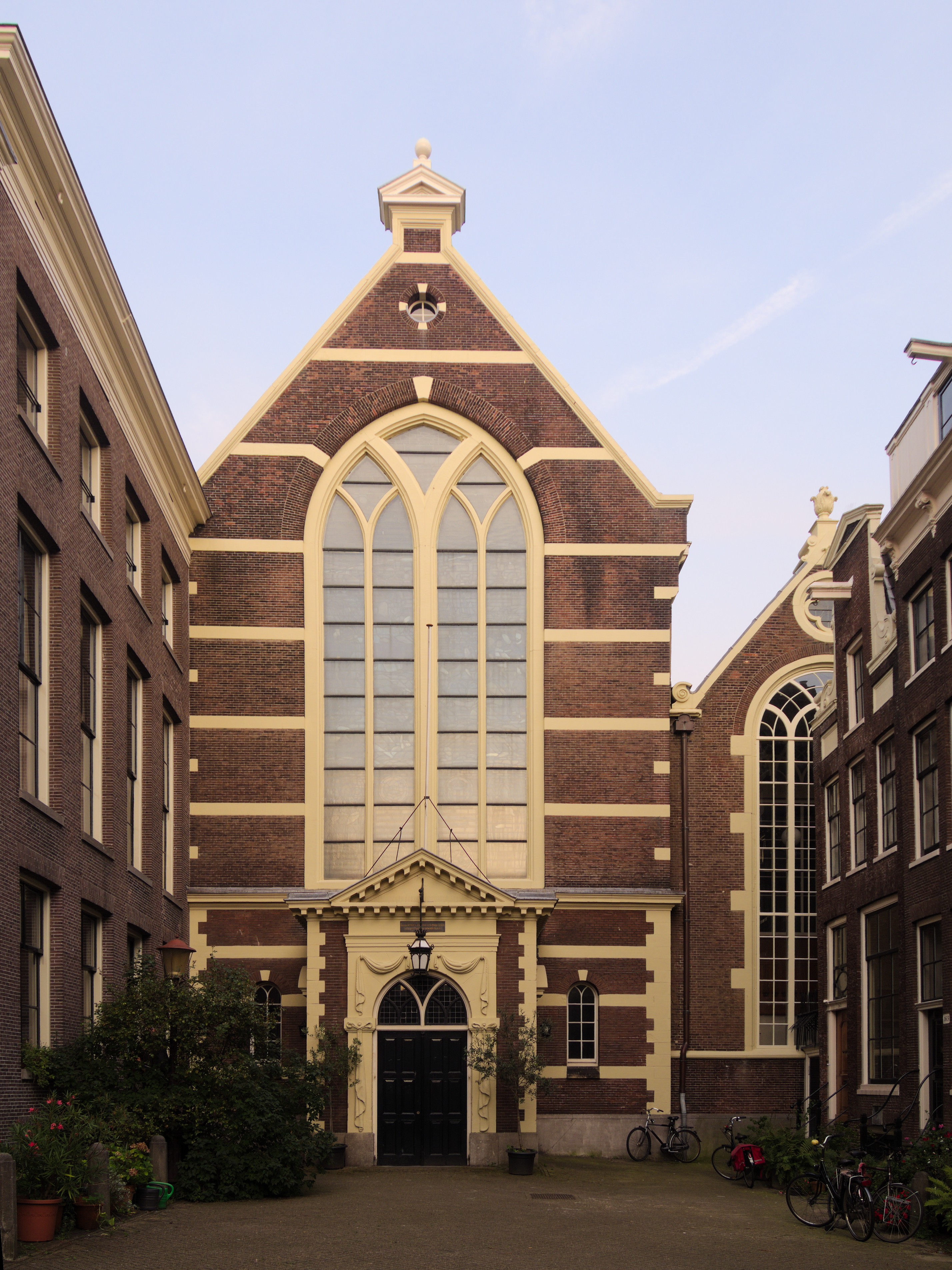
The Walloon Church began as the chapel of the Saint Paul Brothers Monastery in Amsterdam, built in 1409. After a city fire probably destroyed it in 1452, the monastery received permission for a replacement in 1493, consecrated in 1496. The chapel became a place of French-language Protestant worship after the Reformation.
Amsterdam confiscated the chapel in 1578 and used it, among other purposes, for storage. In 1586, it was assigned to Walloon Reformed refugees from the Southern Netherlands and France. Hendrick de Keyser designed the north entrance gate, added in 1616; skulls on the gate refer to funeral processions that passed through it. A classical-style portal followed in 1647.
The church gained a south aisle in 1661, and its first organ, built by Nicolaas Langlez, arrived in 1680. After the Edict of Nantes was revoked in 1685, the congregation grew and galleries were installed on three sides. The building still proved too small, so the New Walloon Church opened in 1719. A new organ by Christian Müller entered use in 1734.
On 12 October 1755, a baker’s assistant entered during a service and fired at the pastor, angry about the pastor’s intervention in his love affair. The bullet grazed the pastor, who fell down the pulpit stairs and suffered a severe head wound, then recovered. The assailant was arrested and served a long prison sentence.
Remodeling in 1816 and 1891 removed the galleries. A façade installed in 1885 later caused subsidence, addressed during restoration from 1990 to 1992. Workers found numerous gravestones and replaced the concrete floor with a self-supporting floor on its own foundation. The church was designated a national monument in 1970.
The Müller organ was restored from 1960 to 1965, then again in 1993. In 2000, organ builder Henk van Eeken restored its wind chest and repaired façade pipes. The Walloon Church is known for its acoustics and hosts concerts and music recordings.
French-language worship continues every Sunday, and the church is the burial place of painter Bartholomeus van der Helst and scientist Jan Swammerdam. Elizabeth Timothy, the first female American newspaper editor and publisher, was probably baptized there. Its organ, built by Christian Müller, is described as one of the best-preserved Müller organs.
Listen to this audio guide in the app
The website shows the text and photos. The audio guide, map and nearby places are in the free Hotspot app.
Download free on Google Play