
Nieuwe Kerk, Amsterdam
Amsterdam, Netherlands (Kingdom of the)
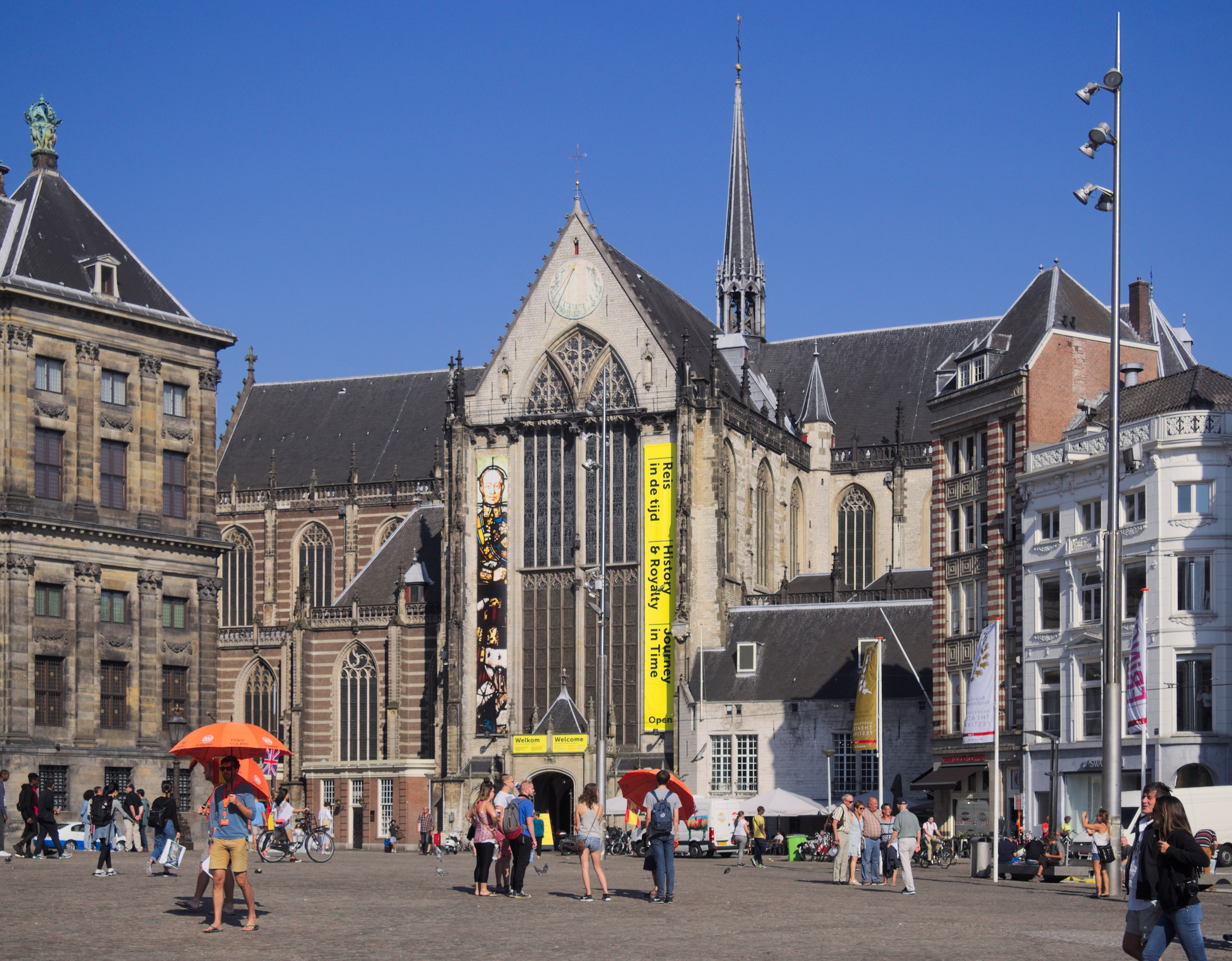
The Nieuwe Kerk is a church built to serve Amsterdam’s growing population. Willem Eggert donated the land and financed construction, which began around 1380. The Bishop of Utrecht authorized a second parish church in 1408, and it was consecrated the following year. Its choir and transept are the oldest parts, while work on the nave began around 1435. Eight bays were planned, but limited space reduced the nave to five; side aisles and a clerestory followed later.
Fires damaged the church in 1421 and 1452, and the north transept was raised after 1538. A tower project began with foundations in 1565, but no tower was completed. After the church entered Protestant use in 1578, much of its Catholic interior was destroyed.
On 11 January 1645, a fire caused by roofers’ negligence spread in a strong northeasterly wind. The roof collapsed at three in the afternoon, leaving the choir and radiating chapels; copper chandeliers were recovered intact from the ruins. The restored church returned to use in 1648, with stone vaults replacing wooden ones, a new pulpit and organ, and gilded foliage on the central crossing vault.
A second tower project began in 1646, and the last of its 6,363 foundation piles went in the following year. Work stopped in 1653 because Amsterdam was paying for its new town hall, and most of the unfinished structure was demolished in 1783. Its remaining base became part of the west façade. The church’s main organ dates from 1655, while its choir screen dates to about 1650.
Willem Eggert was buried in the Eggert Chapel in 1417, and the church later became the burial place of about ten thousand people. Admiral Michiel de Ruyter was among those buried there, alongside writers and other figures. A restoration led by architect Christiaan Posthumus Meyjes Sr. began in 1892 and continued into the early twentieth century, adding Neo-Gothic elements.
The church became a venue for Dutch royal investitures in 1814. Queen Wilhelmina’s investiture took place there on 6 September 1898, and the ceremony was captured in the first film footage made in Amsterdam and the Netherlands. During restoration from 1959 to 1980, architect C. Wegener Sleeswijk directed structural repairs, improved lighting and installed new foundations. Most graves were cleared during that work.
In 1980, the church was transferred to the National Foundation De Nieuwe Kerk as declining attendance left its congregation unable to afford maintenance and management. It no longer holds regular services and now hosts changing exhibitions and organ concerts. Its interior includes a sixteenth-century transept organ, a pulpit made between 1649 and 1664, private pews added after the fire, monuments and stained-glass memorial windows.
The church hosted the blessing of Willem-Alexander and Máxima’s civil marriage on 2 February 2002. As the couple entered, the main organ shutters opened, and the image was broadcast around the world. Willem-Alexander was invested there in 2013, continuing the church’s role in royal ceremonies.
The church also hosts the annual National Remembrance Day ceremony on 4 May. Its memorial windows include the Wilhelmina jubilee windows from 1938 and the Liberation Window from 1995. Memorial stones commemorate writers including Hella Haasse, whose stone was unveiled in 2018, followed by stones for Johan Huizinga, Multatuli and Willem Frederik Hermans.
Listen to this audio guide in the app
The website shows the text and photos. The audio guide, map and nearby places are in the free Hotspot app.
Download free on Google Play