
Aqueduct of Valens
Istanbul, Turkiye
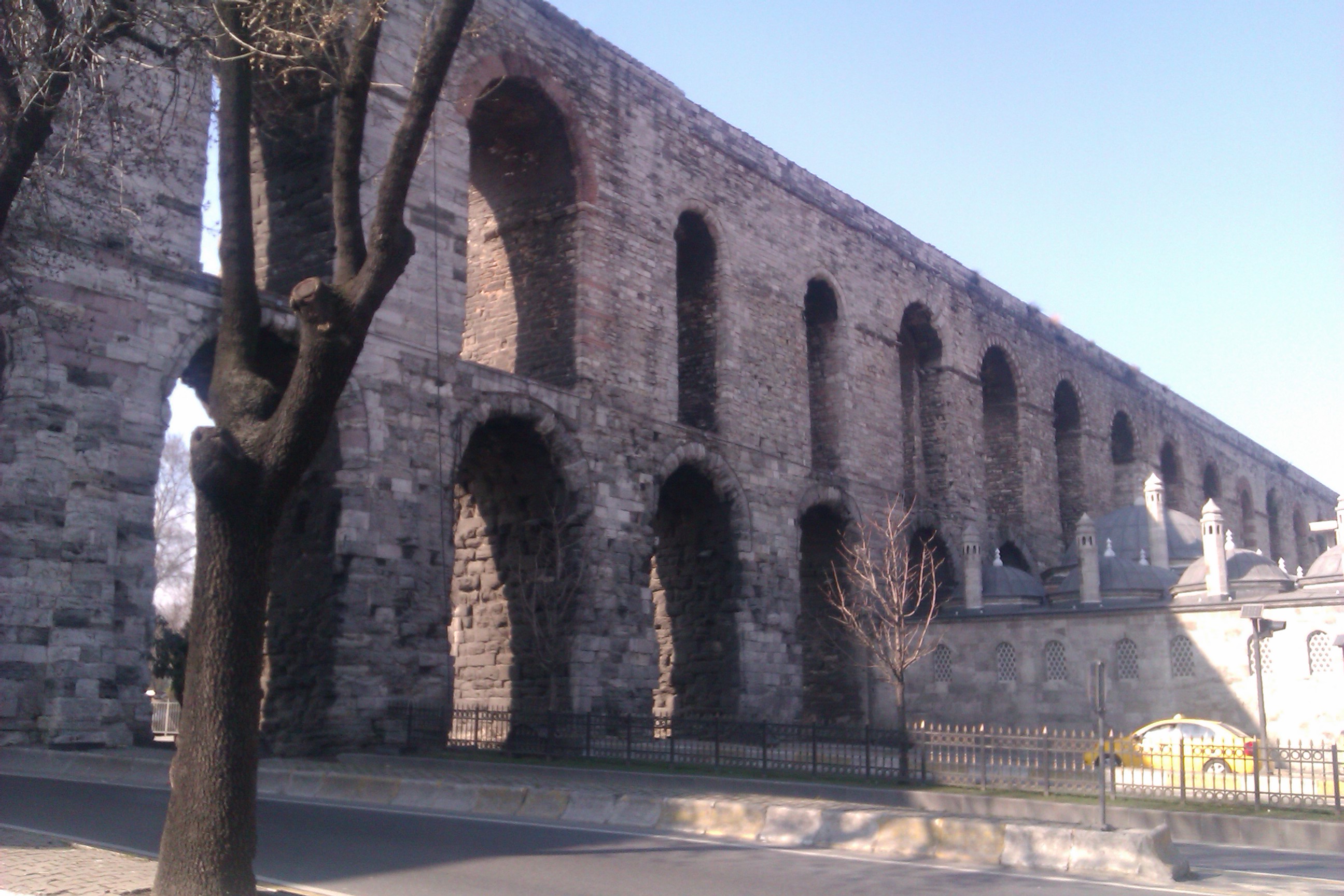
The Bozdoğan Aqueduct is a Roman water channel in Istanbul, completed by Emperor Valens in 378. Its construction began under Constantine I, as the city expanded its water-reserve system. That system had begun under Hadrian and grew under Constantine I, carrying water from Thrace toward Constantinople. A reported account says governor Klearchos ceremonially put the aqueduct into service in 373 at the Forum of Theodosius, five years before Valens completed it. The aqueduct formed the system’s final section, while reservoirs and cisterns stored water within the city.
Justinian I restored the aqueduct and completed connections to the Basilica Cistern and Binbirdirek Cistern. Justin II repaired it in 576, but the Avar siege damaged a section outside the walls in 626 and interrupted the supply. Constantine V ordered repairs in 758, and maintenance followed under Basil II in 1019 and Romanos III.
The aqueduct was still active when the envoy Ruy Gonzáles de Clavijo passed through Constantinople in 1403. After the Ottoman conquest in 1453, Mehmed II had the system repaired and connected to a new line serving the Old Palace and later Topkapı Palace. A 1509 earthquake damaged the structure near Şehzade Mosque, and the destroyed sections were rebuilt soon afterward.
Under Süleyman the Magnificent, water from the Belgrade Forest was connected to the aqueduct, with Mimar Sinan arranging the connection. The increased supply went to Kırkçeşme on the Golden Horn, where many fountains were built. Arches 47 to 51 beside Şehzade Mosque were restored in a Gothic style, while Mustafa II later had arches 41 to 45 restored to their original form. An inscription dated 1696 or 1697 commemorates work under Mustafa II.
The aqueduct crosses a valley between the hills now occupied by Istanbul University and Fatih Mosque. Its original straight route was bent during construction of the mosque, for reasons that are unknown. Cut stone and brick form the structure, with double-tiered arches in its central section and single-tiered arches elsewhere.
The wider water system reached as far as 250 kilometres and supplied three open reservoirs and more than one hundred underground cisterns. Their combined capacity exceeded one million cubic metres. A 50-metre section on the Fatih Mosque side collapsed in 1912; the surviving length is 921 metres, compared with a stated overall length of 971 metres. The Bozdoğan Aqueduct was among the aqueducts supplying Istanbul in the Middle Ages. Its arches remain part of the city’s historic record, with Atatürk Boulevard passing beneath them.
Listen to this audio guide in the app
The website shows the text and photos. The audio guide, map and nearby places are in the free Hotspot app.
Download free on Google Play