
Collegium Maius, Kraków
Krakow, Poland
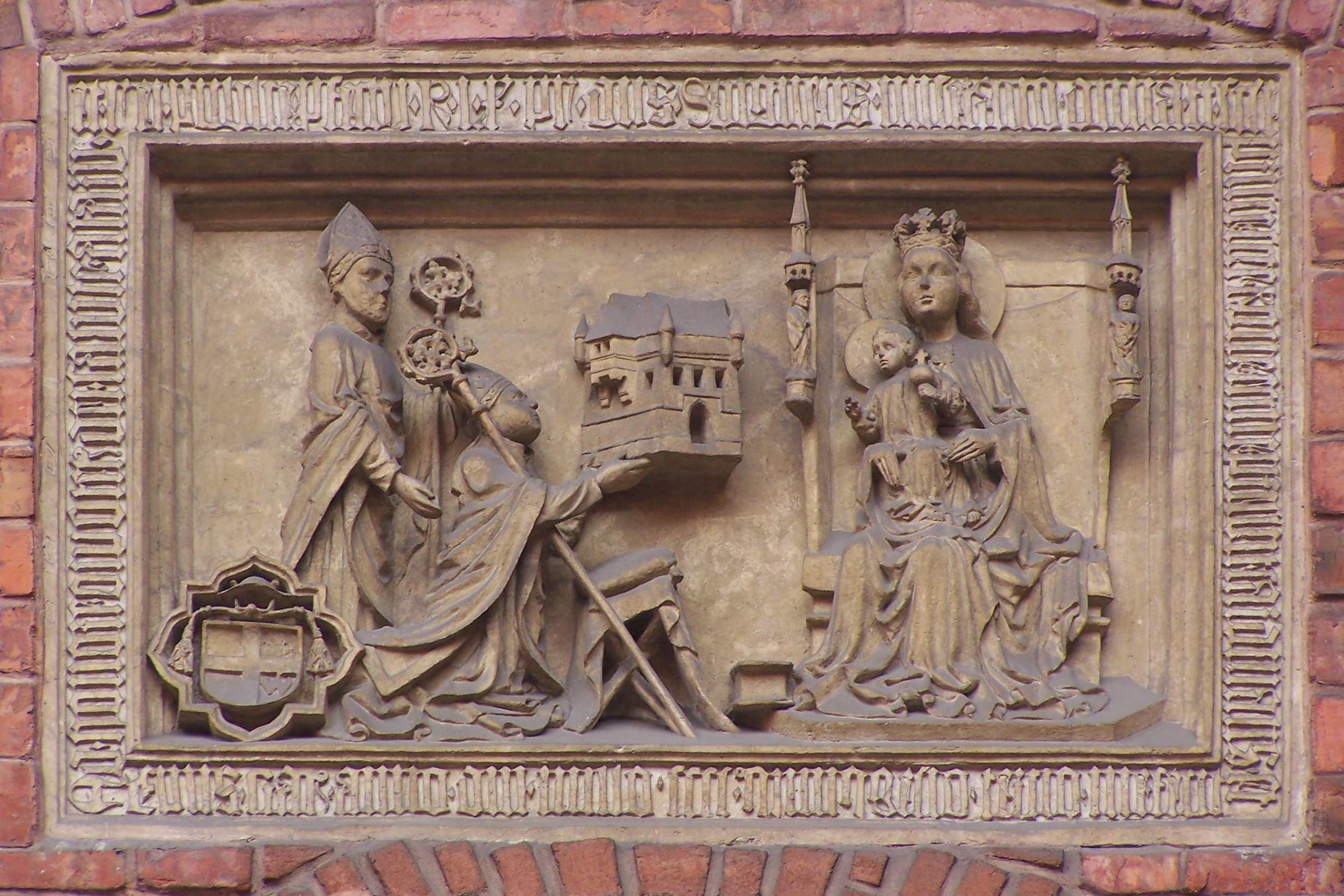
Collegium Maius is the oldest building of the Jagiellonian University in Kraków, acquired in 1400 as the academy was renewed. King Władysław Jagiełło bought a corner tenement from the Pęcherz family for 600 grzywnas, using funds from Queen Jadwiga’s bequest. The building grew through the purchase of neighboring houses during the fifteenth century. By the middle of that century, it was known as Collegium Maius. A fire in 1492 brought a major change: the buildings were joined, upper storeys added, and the courtyard enclosed by arcaded galleries with crystal vaults. In 1507, Mikołaj of Koprzywnica supervised roof construction, including tiles and a gable above the aula.
From 1839 to 1858, Karol Kremer led a neo-Gothic rebuilding to adapt the building for the Jagiellonian Library. Herman Bergmann continued the work from 1864 to 1870. The library remained there until 1940, when restoration began under Professor Karol Estreicher, returning the building toward its pre-1840 state. The university senate established the Jagiellonian University Museum there in 1947.
Stone and brick form the building, whose street façade has Gothic gables and a bay window. A Gothic portal opens onto a courtyard with a central well and galleries supported by arcades. Two stairways reach the first-floor gallery, including the larger professors’ stairs; on the south side, Porta Aurea is the late-Gothic entrance to the Libraria.
The museum’s collections include astronomical instruments, including instruments used by Nicolaus Copernicus, an Arabic astrolabe dated 1054, and the Jagiellonian Globe. Its institutional roots reach a nineteenth-century collection called the Cabinet of Art and Archaeology, because Austrian authorities prohibited official use of the word museum. In 2000, the fourth clock in succession began playing a work by Jan of Lublin and Gaudeamus igitur, while six figures emerge from its face. In 1971, a Polish Post stamp depicted Collegium Maius, remaining in circulation until 1994.
Listen to this audio guide in the app
The website shows the text and photos. The audio guide, map and nearby places are in the free Hotspot app.
Download free on Google Play