
Casino Mediceo di San Marco
Florence, Italy
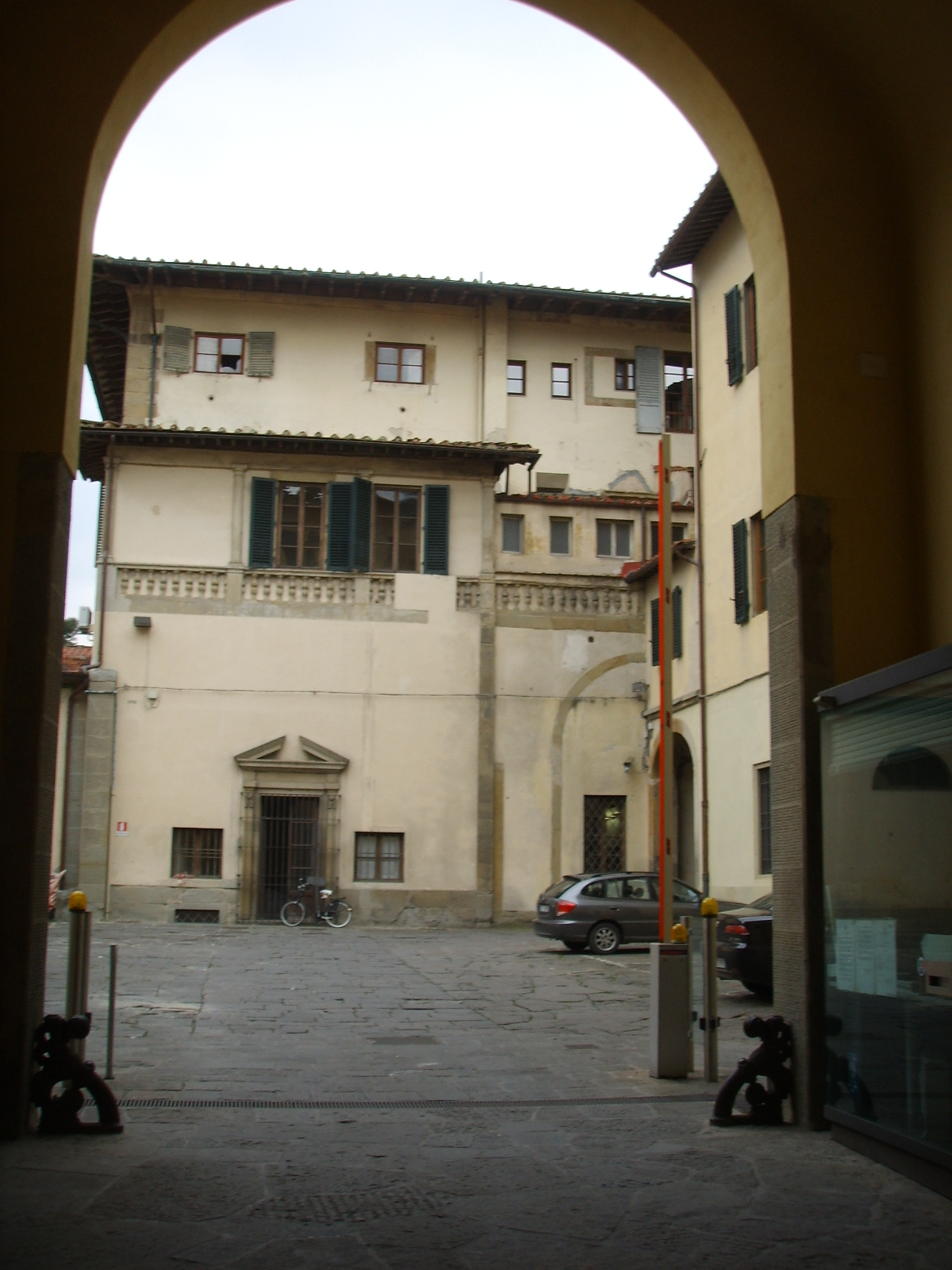
The Casino Mediceo di San Marco is a palace in Florence, rebuilt for Francesco I de’ Medici between 1570 and 1574. Bernardo Buontalenti designed it as a place for scientific study, experimentation, and leisure. The earlier house on the site belonged to Ottaviano de’ Medici, who had bought it from the Company of Silk Weavers. After a large debt to the state treasury, he had to surrender the property, which entered Duke Cosimo I’s holdings. Francesco I later commissioned Buontalenti to rebuild it as a city casino and scientific workshop.
The palace housed Medici foundries where Buontalenti developed Medici porcelain, Europe’s first soft-paste imitation of Chinese porcelain. After Francesco I’s death, the Opificio delle Pietre Dure briefly occupied the building in 1588. Ferdinando I later granted it to Don Antonio de’ Medici in exchange for renouncing dynastic rights, and Don Antonio moved in during 1597.
Don Antonio established a scientific research cabinet, a specialist library, and a small private theatre. The library later entered the National Central Library of Florence. After his death in 1623, Cardinal Carlo de’ Medici inherited the palace and commissioned work by Gherardo Silvani, along with decorative frescoes made between 1621 and July 1623.
By 1623, Filippo Tarchiani had decorated the chapel with scenes from the life of Saint Joseph. Cardinal Carlo’s death brought the palace to Cosimo III, who stripped its furnishings and allowed it to deteriorate as a warehouse. Under the House of Lorraine, it was restored and altered, serving as Noble Guard barracks until 1846, then as customs offices.
In 1842, Federico Fantozzi criticized the central portal as too heavy, bizarrely ornamented, and lacking graceful profiles. From 1865 to 1871, the palace was adapted for Ministry of Finance offices during Florence’s period as Italy’s capital. It later housed state property and tax offices, the Court of Appeal, and the Office of the Public Prosecutor General.
The facade’s central portal and terrace carry masks, animal-headed brackets, stone shells, festoons, and ram heads. Beneath a wooden shell, a monkey figure emerges. In the courtyard, a fountain group depicts Venus and Cupid with a bow, attributed to Raffaello Petrucci and possibly dating to the early 1620s.
Restoration work addressed the ground-floor windows, portal, and terrace in 1906, followed by facade work in 1911. Further facade and stone repairs took place from 1939 to 1942, including work on large brackets in January 1941. A structural check of painted ground-floor vaults was documented in 1962, and roof work followed in 1970 and 1971.
The palace entered Italy’s national list of buildings considered artistic heritage in 1901. Two works by Sandro Botticelli formerly housed there, Discovery of the Body of Holofernes and Return of Judith to Bethulia, are now in the Uffizi. After the Palace of Justice opened in Novoli in 2012, the Casino Mediceo di San Marco became the seat of the Florence School of Transnational Governance, part of the European University Institute.
Listen to this audio guide in the app
The website shows the text and photos. The audio guide, map and nearby places are in the free Hotspot app.
Download free on Google Play