
Pieve of Santa Maria Assunta a Chianni
Gambassi Terme, Italy
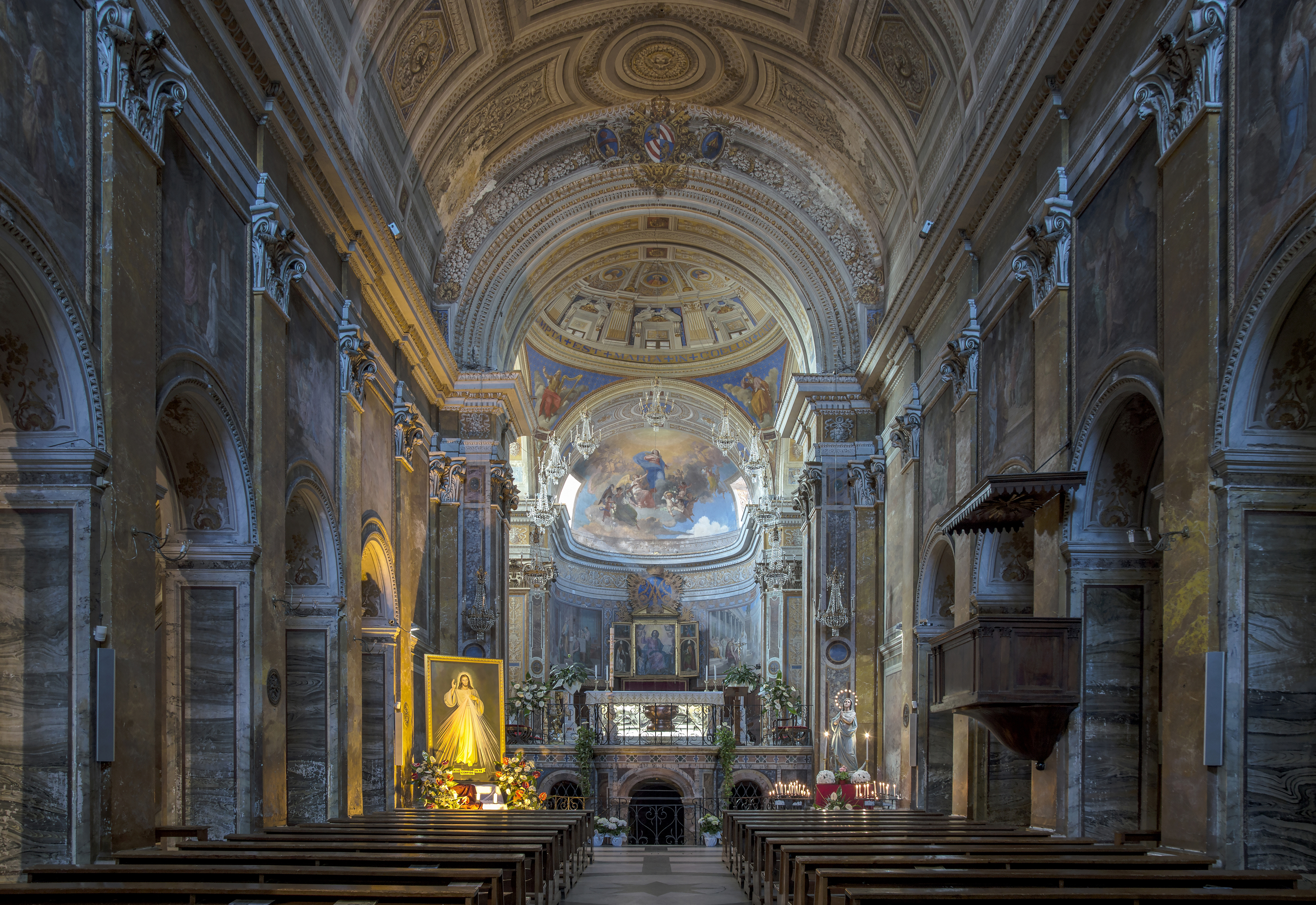
The Pieve of the Assumption of Saint Mary at Chianni is a Romanesque parish church rebuilt around 1200. Sigeric, Archbishop of Canterbury, recorded it as a stage on the Via Francigena. Between 990 and 994, Sigeric’s itinerary listed Chianni as the twentieth stage of his return journey from Rome to England. He called the place S[an]c[t]e Maria Glan. A document from 1061 mentions a cloister, while another, recorded in 1210, says the present church did not exist in 1174.
Around 1200, the parish complex was rebuilt into substantially its present form as Gambassi’s castle was taking shape. Traces of the earlier basilica-plan church remain only in the transept. Construction was still underway in 1224, when Gambassi levied a tax for church expenses, roads and public fountains.
The church belonged to the Bishop of Volterra until the thirteenth century, amid disputes over control with the Cadolingi counts and San Gimignano. Though its parish had twenty-one suffragan churches, it paid only seven lire and seventeen soldi in tithes in 1276. Pope Boniface the Eighth revoked assets and privileges granted to the parish priests in 1301.
Two religious companies later formed at the church. The Company of the Holy Cross began in 1348, and the Company of Saint Mary, reserved for priests, followed in 1360. In 1356, Bishop Filippo Belforti made the church the seat of the Caposesto of Valdelsa for the Diocese of Volterra.
Reports in the fifteenth century charted repairs and damage. A corner had collapsed by 1413 but was repaired; later inspections judged the church in good condition. The roof was unsafe in 1465, and deep wall cracks were reported in 1501. A major renovation followed in 1520, and around 1550 the choir was enlarged, replacing the original Romanesque apse with a rectangular-ended scarsella.
The sandstone church has three aisles, a transept and six bays, with a raised presbytery separated from the nave by a triple triumphal arch. Its façade has three levels of blind arcades, and the central portal sits beneath a three-arched composition. In 1782, Archpriest Corsi had the round façade opening converted into a rectangular window. Two buttresses were added in 1842 when the façade showed signs of imminent failure.
The church was declared a national monument in 1879, and later restoration removed its Baroque additions. The ancient apse remains were discovered during consolidation work in 1957; another restoration campaign followed in 1979. After 2009, adjoining buildings were renovated to house a pilgrims’ hostel.
Chianni’s place on the Via Francigena links the church to Sigeric’s recorded itinerary. Its design also reflects connections with Volterra, including features inspired by Volterra Cathedral, and with Pisa in the façade’s influences. Inside, a seventeenth-century copy of Andrea del Sarto’s Pala di Gambassi is attributed to Francesco Curradi. The original entered the Medici collections in the seventeenth century in exchange for the copy.
Listen to this audio guide in the app
The website shows the text and photos. The audio guide, map and nearby places are in the free Hotspot app.
Download free on Google Play