
Socrates
Athens, Greece
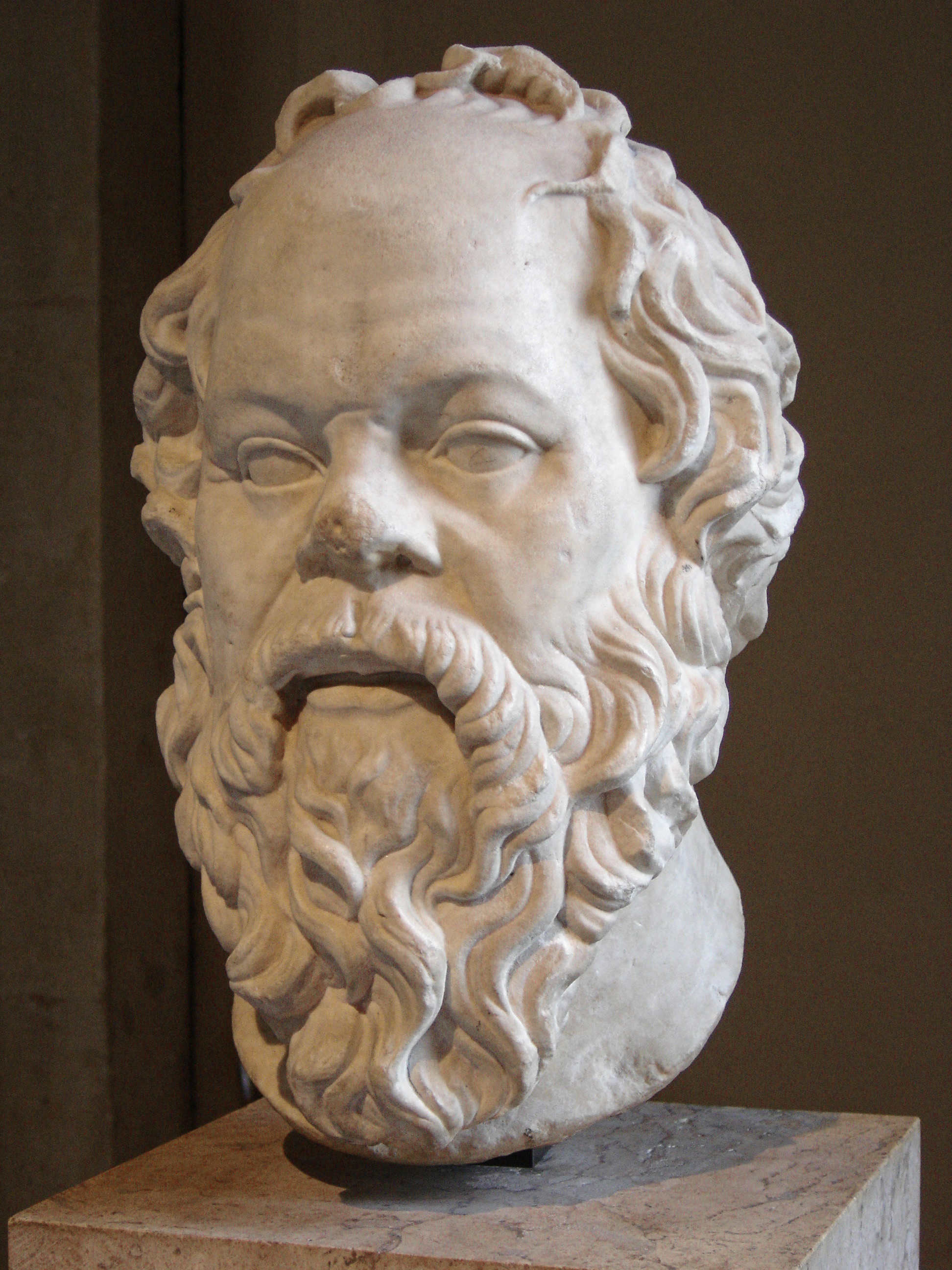
Socrates was an Athenian philosopher born in Alopece in 470 or 469 BC. He wrote no philosophical works, so accounts of his life and thought come chiefly from Plato and Xenophon. His father, Sophroniscus, was a stonemason, and his mother, Phaenarete, was a midwife. After his father’s death, Socrates inherited part of the family property. He later married Xanthippe, with whom he had three sons, though accounts differ about whether he married once or twice.
During the Peloponnesian War, Socrates served in three military campaigns. According to Plato, he was at Potidaea in 432 BC, fought at Delium in 424 BC, and served at Amphipolis in 422 BC. Apart from these campaigns, the accounts say he never left Athens.
Socrates did not establish a school or teach systematically, and he accepted no payment. Instead, he held conversations around Athens with people from different social classes. His questioning often began by asking someone regarded as an expert to define a concept, then tested the answer for contradictions.
He combined those questions with irony, professing ignorance about the subject under discussion. Further questioning could expose gaps in an interlocutor’s understanding and leave the discussion at an impasse. The method became known as the Socratic method, or elenchus.
During the rule of the Thirty Tyrants, Socrates refused an order to help seize a democratic citizen for execution. The episode was one of two reported refusals to participate in unlawful acts by Athens’ rulers. In 406 BC, after the Battle of Arginusae, he also refused to put an illegal proposal to a vote.
That proposal called for a collective trial of the generals who had taken part in the battle. Socrates opposed it while his tribe held the prytany, the group responsible for handling the city’s business. In 403 BC, democratic rule was restored and a general amnesty was granted.
In 399 BC, Meletus brought a prosecution against Socrates, joined by Anytus and Lycon. The charges included rejecting the state religion, introducing new divinities, and corrupting the youth. The trial lasted no more than a day, and a jury of about 500 Athenian men found him guilty and sentenced him to death.
Socrates did not seek the legally available option of exile. According to Plato, he proposed either free maintenance by the state or a fine of one mina of silver. The jurors rejected those alternatives, and the death sentence remained.
Execution was delayed until the sacred ship returned from a festival at Delos. Xenophon gives the interval as about 30 days. While Socrates remained in prison, friends offered to help him escape, but he refused; when the time came, he drank hemlock.
The reasons for the conviction remain disputed. Explanations include religious concerns, political concerns about the perceived subversiveness of his teaching, or both. The available evidence does not settle which motives shaped the verdict.
Accounts of Socrates also raise questions about what can be known of his life and thought. Plato, Xenophon, Aristophanes, and Aristotle portray him in different ways, and scholars have questioned how faithfully the dialogues represent the historical philosopher. In 1818, Friedrich Schleiermacher’s work on Socrates’ value as a philosopher challenged Xenophon’s reliability and helped establish what became known as the Socratic problem.
Socrates’ questioning helped redirect philosophy toward ethics and virtue, and he is described as one of its earliest moral philosophers. His thought inspired Plato’s Academy, Aristotle’s Lyceum, Stoicism, and other schools, though Epicureans and Pyrrhonists were notable exceptions. Epicureans criticized his religious beliefs and use of irony.
Later traditions carried his ideas across different intellectual settings. Islamic scholars transmitted and adapted Socratic ideas, while medieval Christian writers interpreted them through Christianity. Socratic thought also played an important role in Italian Renaissance humanist circles.
Modern writers continued to debate Socrates’ influence. In 1872, Friedrich Nietzsche criticized his effect on Greek culture in The Birth of Tragedy, and he returned to that criticism in Twilight of the Idols in 1887. Karl Popper’s 1945 book The Open Society and Its Enemies presented Socratic individualism as an example of the open society. In 1963, Hannah Arendt’s Eichmann in Jerusalem discussed Socratic questioning and self-examination as possible safeguards against the banality of evil. Socrates has also inspired works of painting, literature, and popular culture, and remains one of the best-known figures in Western philosophy.
Listen to this audio guide in the app
The website shows the text and photos. The audio guide, map and nearby places are in the free Hotspot app.
Download free on Google Play