
Mamilla Cemetery
Jerusalem, Israel
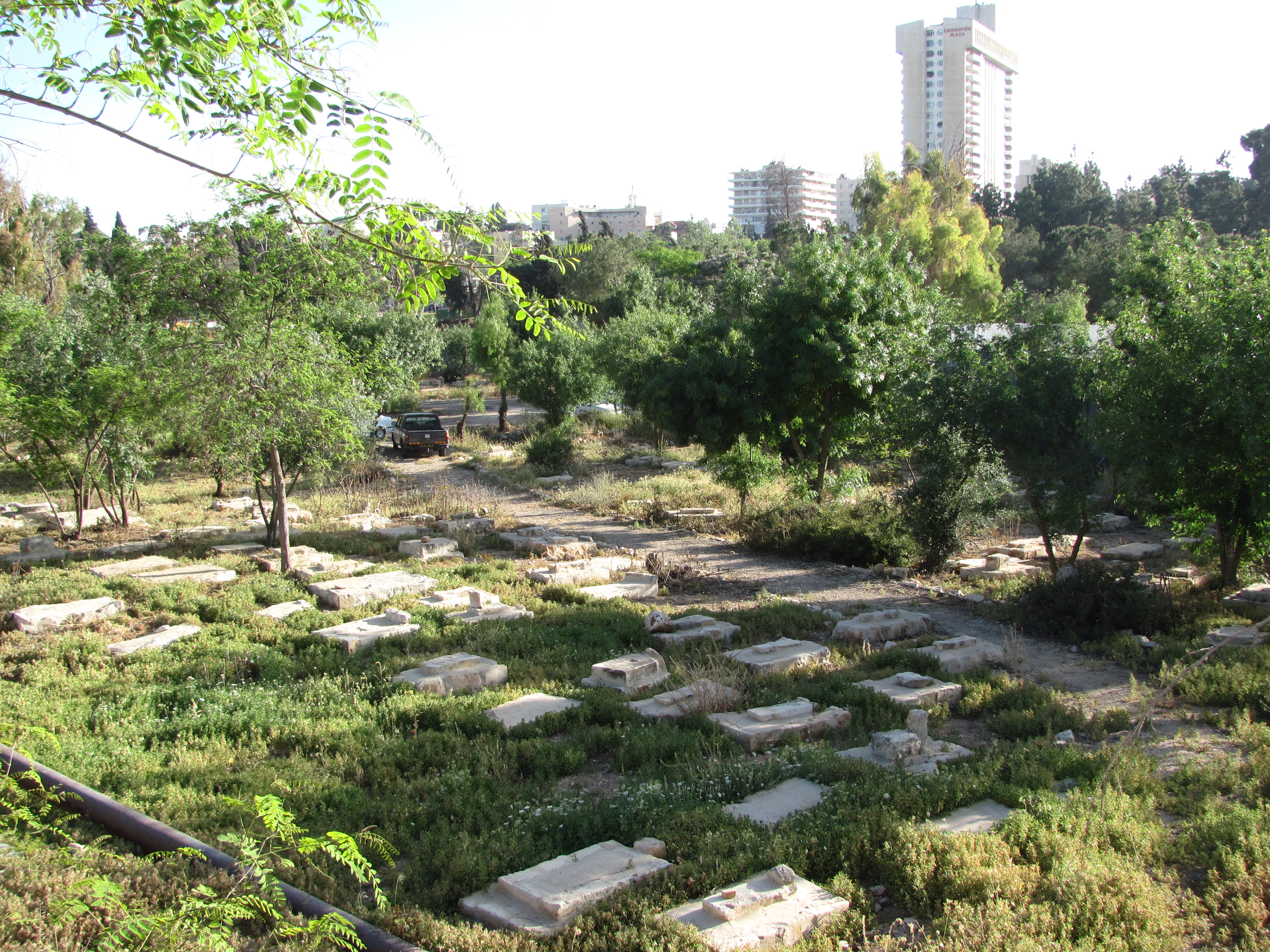
Mamilla Cemetery is a historic Muslim cemetery in Jerusalem, with a church established there during the Byzantine period. The grounds were used for burials and later became the city’s largest Islamic cemetery. A church dedicated to St Mamilla stood beside the Mamilla Pool, which remains at the cemetery’s center. A monk’s account says that, after Persian forces captured Jerusalem in 614, thousands of Christians killed during the siege were buried in caves near the pool. The account gives different totals in its Georgian and Arabic translations, so the number is uncertain.
By the early eleventh century, Arab and Persian writers recorded the cemetery’s Islamic identity. Abu Bakr al-Wasiti mentioned it in a treatise written in 1019 to 1020, using the name zaytun al-milla. During early Islamic rule, emirs, muftis, Sufi mystics, soldiers and other Jerusalem residents were buried there.
The cemetery continued to serve as a burial place under Crusader and Ayyubid rule, including for Christians during the Crusader period. In 1194, the Sufi mystic al-Quraishi died and was buried there. It later became a notable burial place during Mamluk rule, with tombs including the funerary chapel of al-Kebekiyeh.
Al-Kebekiyeh is a square, one-room building covered by a dome, with architectural materials from the Crusader era. It is identified as the tomb of emir Aidughdi Kubaki, who died in 1289. The cemetery also held Frankish sarcophagi, which Charles Simon Clermont-Ganneau described and sketched in the nineteenth century.
Under Ottoman rule, the cemetery remained in use and was enclosed by a fence in 1847. By the 1860s, a wall and surrounding road separated it from urban development. The grounds continued to serve as a burial place into the early years of British rule in Mandate Palestine.
In 1927, the Supreme Muslim Council decided to stop burials and preserve the cemetery as a historic site. The Islamic waqf continued to control the grounds, and British mandatory authorities designated them an antiquities site in 1944. That designation came before the cemetery’s transfer to Israeli governmental administration in 1948.
In 1929, workers laying the Palace Hotel’s foundations uncovered Muslim graves. Contractor Baruch Katinka wrote that Mufti Mohammad Amin al-Husayni authorized the bones to be reburied elsewhere. Rival factions then sued the mufti in Muslim courts, accusing him of desecrating ancient graves.
After 1948, parts of the cemetery were built over, including for Independence Park. In 1955, bulldozers destroyed tombs, including identified Frankish sarcophagi, to establish the park. A large area was bulldozed for a parking lot in 1964, and a public lavatory was built on the grounds.
Other land became roads, public facilities, a school, public squares and government buildings. The Jerusalem Municipality acquired the grounds from the Custodian of Absentee Property in 1992. Mufti of Jerusalem Ikrema Sabri said the transfer was unauthorized.
The Simon Wiesenthal Center announced plans for a Museum of Tolerance on part of the cemetery grounds in 2004. The project prompted controversy and several stop-work orders. Critics objected to construction on a historic Muslim cemetery, while the center said its proposed site was beside a parking lot used for decades.
During preparations in 2005 and 2006, skeletons were found and removed despite a temporary court ban on work. After the Supreme Court rejected a petition in October 2008, crews worked around the clock from November 2008 to April 2009. They removed an estimated 1,000 skeletons from the construction site.
Architect Frank Gehry resigned from the museum project in January 2010. That year, 84 archaeologists urged the center, municipality and Israel Antiquities Authority to halt construction, arguing that it violated archaeological ethics and Israeli law. The center responded that their arguments were mistaken and included factual errors.
In August 2010, the Israel Lands Administration bulldozed about 300 gravestones. The city council said the stones were dummy markers placed illegally, not over human remains, while an Al-Aqsa Foundation spokesman disputed that account. A design by Chyutin Architects received an official building permit in July 2011.
The cemetery also faced further damage in 2011. Vandals destroyed or removed tombstones from twenty graves in January. On the night of June 25 to 26, bulldozers destroyed about 100 gravestones in an intact section, and fifteen gravestones were spray-painted with racist slogans that year.
Arab and Persian writers recorded the cemetery’s Islamic identity by the eleventh century, and it has been described as Palestine’s largest and most important Muslim cemetery. Tradition associates it with companions of Muhammad and about 70,000 soldiers of Saladin. It is also associated with Sufi mystics al-Quraishi and Ibn Arslan.
Listen to this audio guide in the app
The website shows the text and photos. The audio guide, map and nearby places are in the free Hotspot app.
Download free on Google Play