
Osborne bull
Castilleja del Campo, Spain
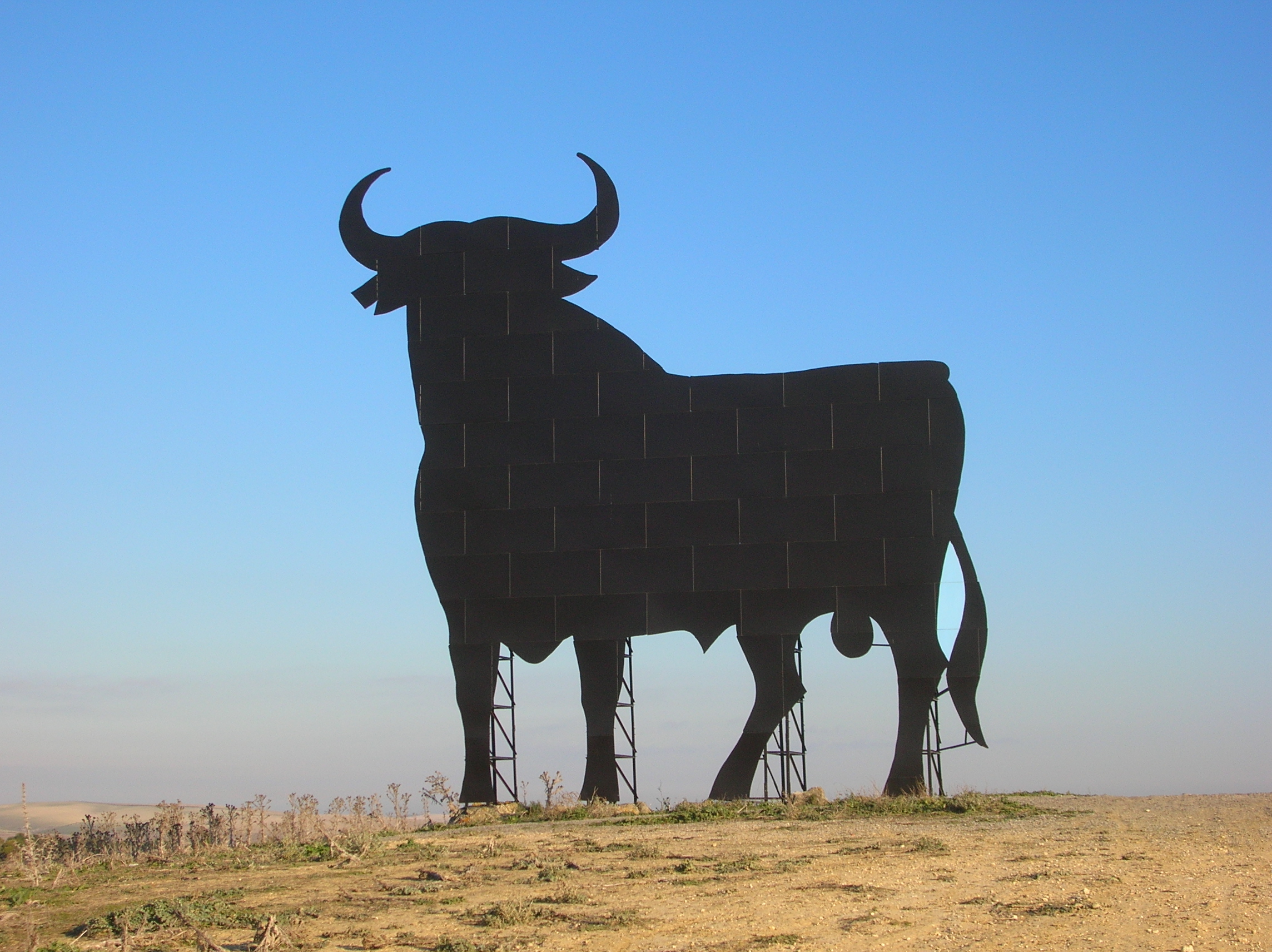
The Osborne Bull is a roadside advertising silhouette designed in 1956 for Grupo Osborne’s Veterano brandy. Graphic artist Manolo Prieto proposed the fighting-bull shape through the Azor Publicidad agency. The first wooden billboards began appearing beside roads in November 1958. Four metres high, they carried the drink’s name and had white-painted horns. Adverse weather prompted a change to metal-clad signs in 1961. After road-advertising regulations changed, installations nearly fourteen metres high followed in 1962.
A law in 1988 required advertising visible from state roads to be removed, so the lettering disappeared while the bull structures remained. Then, in 1994, a road regulation ordered every bull removed. That same year, Spain’s Congress of Deputies declared the image cultural and artistic heritage of the peoples of Spain.
The removal order brought support from autonomous communities, municipalities, cultural associations, artists, politicians and journalists. Andalusia sought cultural-asset classification, while Navarre used a regional law to retain its bull. In December 1997, the Supreme Court ruled that the structures could remain for their attributed aesthetic or cultural interest.
In May 2005, an artist from Cáceres and three others painted the bull at Casar de Cáceres as a Holstein cow. They added white patches and pink sheet-metal udders. The artist was reported by the Civil Guard and sentenced to two days of house arrest for damaging an immovable property.
In 2007, a group calling itself the Catalan Brotherhood of the Black Flag toppled the last Osborne Bull in Catalonia. It had been re-erected only a week earlier, after nine years away. The following May, supporters of the advertising symbol raised a bull near Catalan roads.
Strong winds damaged more bulls in 2009. Winds of nearly 110 kilometres per hour destroyed the Tavernes de la Valldigna bull in January, and Grupo Osborne rebuilt it in October. In February, winds exceeding 100 kilometres per hour brought down the Villajoyosa bull, prompting the local council to request repairs.
The image continued to change through later episodes. In 2011, Mallorca’s bull was painted in gay-pride colours and had its testicles removed. Days later, it was painted black and the testicles were welded back on; later, peace symbols appeared on it. In 2012, young people cut the horns off the Son Real bull.
In 2017, artist Sam3 reproduced Picasso’s Guernica on the bull at Santa Pola. The Osborne Foundation also published a book marking the design’s sixtieth anniversary. In July 2018, a bull was installed at Matsunoyama, Japan, for the Echigo Tsumari contemporary-art exhibition. Made with earthquake-resistant techniques and integrated into a beech forest, it later entered the museum’s permanent collection.
The bull at Huévar del Aljarafe reappeared beside the A-49 in 2021, on the opposite side of the road after at least ten years away. In 2023, strong winds and rain destroyed the Castilleja del Campo bull, rebuilt the following year. Strong winds also destroyed the La Campana bull in 2024, and it was rebuilt shortly afterward.
The article reports 92 bulls distributed unevenly across Spain, concentrated around the Sherry Triangle in Cádiz and Seville provinces. The image also appears on vehicle stickers and souvenirs, at sporting events and over the Spanish flag. Courts have upheld Grupo Osborne’s trademark rights, despite the bull’s cultural use beyond advertising.
Listen to this audio guide in the app
The website shows the text and photos. The audio guide, map and nearby places are in the free Hotspot app.
Download free on Google Play