
Outer Castle Gate (Vienna)
Vienna, Austria
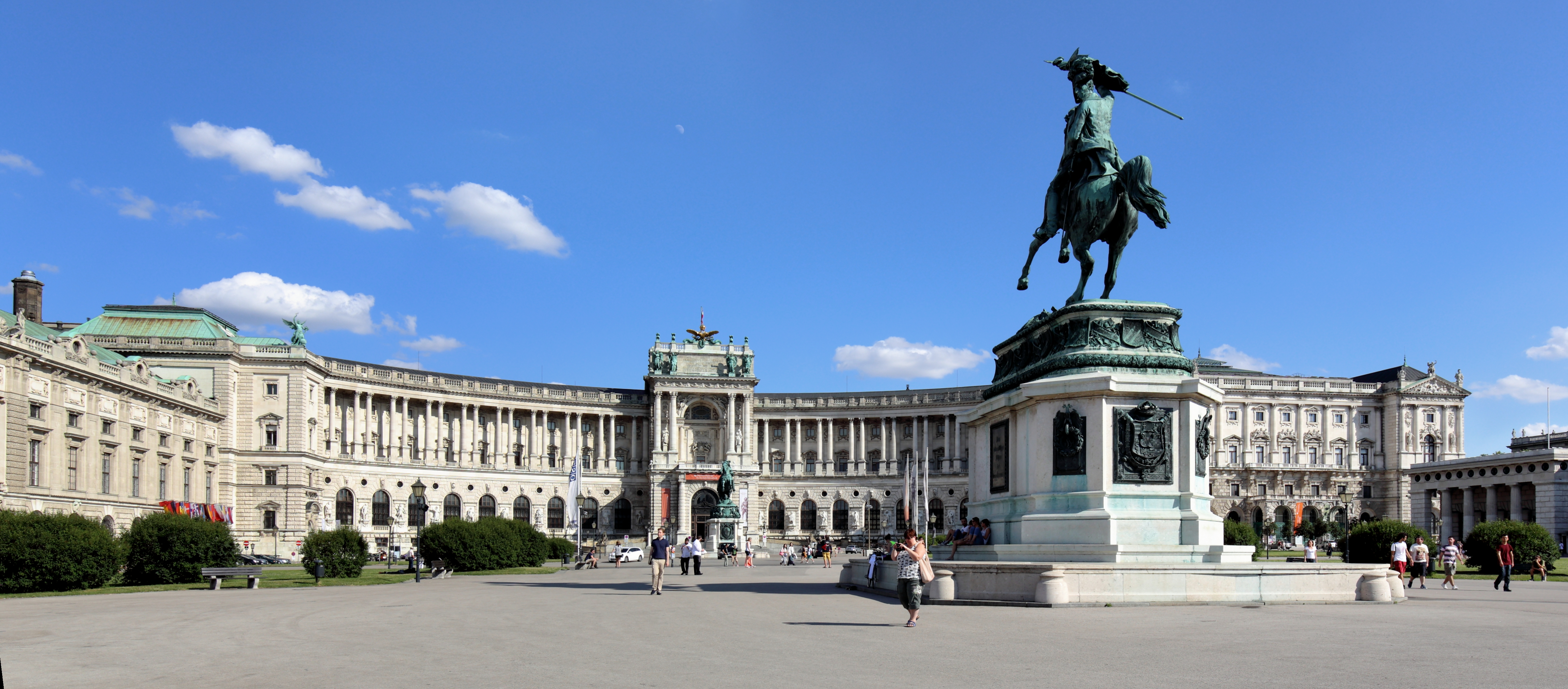
The Outer Castle Gate is a former Vienna city gate, built on foundations of a project begun by Luigi Cagnola in 1818. Peter Nobile redesigned it after Emperor Francis I objected to Cagnola’s planned height. An earlier gate had stood closer to the palace since 1660, as part of Vienna’s fortifications. During the Second Ottoman siege of Vienna in 1683, that gate was heavily contested. In 1809, Napoleon’s soldiers blew it up along with other defenses; its destruction near the emperor’s residence was regarded as a particular humiliation.
The present gate took shape as Vienna’s fortifications had largely lost their military value. Soldiers of the imperial Austrian army carried out the construction, and Francis I attended the ceremonial laying of its foundation stone on 22 September 1821. Five round-arched passages were built in ashlar masonry, using harder stone for heavily loaded parts and calcareous sandstone for less loaded parts.
The gate was ceremonially opened on 16 October 1824, the anniversary of the Battle of Leipzig. Free passage became possible two days later. It originally stood within newly built sections of the city wall, but the walls were later demolished during construction of the Ringstraße, leaving the gate freestanding.
In 1915, Flora Berl initiated a campaign called Laurel for Our Heroes. Donors could have their names engraved on metal laurel leaves or dedicate leaves to soldiers at the front. Heinrich Kautsch designed the wreaths, and proceeds went to support military widows, orphans, and war welfare.
From late February 1934, the gate was adapted as a memorial to those killed in the First World War, while retaining its exterior form. The memorial opened during a patriotic ceremony on 9 and 10 September, though the cenotaph was not yet complete. Stairs lead to a roofless hall of honor, and a crypt was built north of the roadway.
On 15 March 1938, Adolf Hitler laid a wreath in the crypt and passed through the central passage. A separate memorial for the SA in that passage was removed after the war in 1945. In 1965, a room south of the passage was dedicated to victims of Austria’s struggle for freedom, as a counterpoint to the crypt.
The crypt contains a red-marble cenotaph of a dead soldier by Wilhelm Frass and a simple altar. The memorial room holds a black marble block bearing the federal coat of arms, while documents concerning the re-establishment of the Republic of Austria are kept in a display case in the entrance hall. A Holy Mass is celebrated in the crypt every Sunday.
In 2012, the name of Josef Vallaster was found in the crypt’s books of the dead, and it was removed. An expert review also confirmed a concealed Nazi tribute inside Frass’s sculpture of a reclining soldier. The review uncovered a pacifist message by Frass’s assistant, Alfons Riedel. Both writings were transferred to the Museum of Military History on 9 July 2013 and are displayed there as facsimiles.
The ten books of honor listing Austrians killed in the war had been displayed in cases, with their pages turned daily. After renovation, they were removed in November 2012 and handed to the Austrian State Archives on 30 November. Gilded inscriptions remain on the gate: the Ringstraße-facing side honors soldiers worthy of laurel, while the side facing Heldenplatz bears Francis I’s motto, “Justice is the foundation of rule.” The gate’s memorial role developed over time, from the 1915 donation campaign to its First World War crypt and the freedom-struggle room. The construction by soldiers and its opening on the anniversary of Leipzig were intended to evoke the Austrian army’s fight against Napoleon.
Listen to this audio guide in the app
The website shows the text and photos. The audio guide, map and nearby places are in the free Hotspot app.
Download free on Google Play